
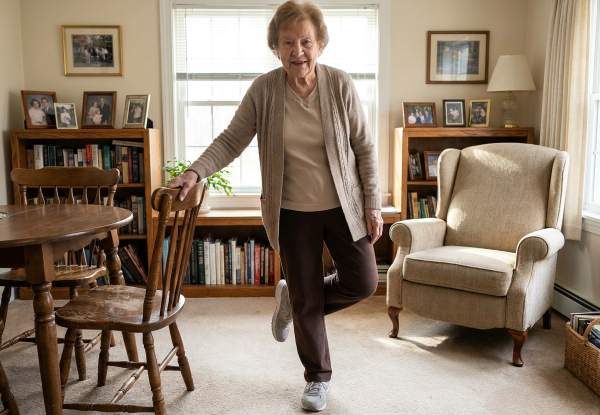
Staying steady on your feet after 60 isn’t just about avoiding falls — it’s about protecting your independence, confidence, and quality of life. Balance naturally changes as we age, but the good news is that balance is a trainable skill. With the right exercises and habits, you can improve your stability at any age. As a Physical Therapist I have helped hundreds of seniors improve their balance as they age.
Here’s how to strengthen your balance, reduce fall risk, and move through life with more confidence.
Why Balance Declines After 60
Several age‑related changes affect stability:
- Weaker leg and hip muscles
- Stiffer joints, especially in the ankles and spine
- Slower reaction time
- Vision changes
- Medication side effects
- Less physical activity over time
The biggest culprit? Inactivity. When we stop challenging our balance, the body stops practicing it — and the skill fades.
The encouraging part: you can rebuild it.
Strengthen the Muscles That Keep You Upright
Strong legs and hips are the foundation of good balance. Focus on exercises that target:
- Quadriceps (for standing up and climbing stairs)
- Glutes (for stability and posture)
- Calves (for ankle control)
- Core muscles (for steady posture)
Great strength exercises for seniors include:
- Sit‑to‑stand https://eldergym.com/sit-to-stand/
- Mini squats https://eldergym.com/hip-flexibility/
- Step‑ups
- Heel raises https://eldergym.com/ankle-stretches/
- Seated leg extensions https://eldergym.com/knee-strengthening-exercises/
Even 5–10 minutes a day makes a difference.
Practice Simple Balance Exercises
Balance improves when you challenge it — safely and gradually.
Try these beginner‑friendly exercises:
- Tandem stance (one foot in front of the other)
- Single‑leg stand (holding a countertop)
- Heel‑to‑toe walking
- Weight shifting side to side
- Marching in place
Start with 10–20 seconds and build up as you feel steadier.
Keep Your Ankles Flexible
Ankles are your body’s “first responders” when you start to lose balance. Stiff ankles = slower reactions.
Add:
- Ankle circles
- Calf stretches
- Gentle heel‑to‑toe rocking
Flexible ankles help you recover quickly from slips and uneven surfaces.
Improve Your Posture
Rounded shoulders and a forward‑leaning posture shift your center of gravity and make balance harder.
Focus on:
- Standing tall
- Lifting your chest
- Keeping your head over your shoulders
- Strengthening your upper back
Good posture gives your body a stable foundation.
Make Your Home Safer
Most falls happen at home — and most are preventable.
Check for:
- Loose rugs
- Cluttered walkways
- Poor lighting
- Slippery bathroom floors
- Pets underfoot
- Cords or cables across the floor
Small changes can dramatically reduce fall risk.
Stay Active Every Day
Walking, stretching, and light strength training keep your body responsive and strong. Aim for:
- 10–20 minutes of walking
- 2–3 days of strength training
- Daily balance practice (even 2 minutes helps)
Consistency beats intensity.
Review Medications and Vision
Two often‑overlooked factors:
- Medications can cause dizziness or low blood pressure
- Vision changes affect depth perception and stability
A yearly check‑in with your doctor and eye specialist is essential.
Know When to Get Help
If you’ve had a fall, feel unsteady, or avoid activities because of fear, a physical therapist can help you:
- Identify your specific balance deficits
- Build a personalized exercise plan
- Improve gait and posture
- Restore confidence
You don’t have to do it alone.
Final Thoughts
Improving balance after 60 isn’t about perfection — it’s about progress. Every time you practice standing a little taller, walking a little farther, or holding a balance pose a few seconds longer, you’re strengthening the systems that keep you safe and independent. Practicing even little things like walking sideways when doing a chore or standing on one foot while brushing your teeth.
Balance is a skill. And like any skill, it gets better with practice.